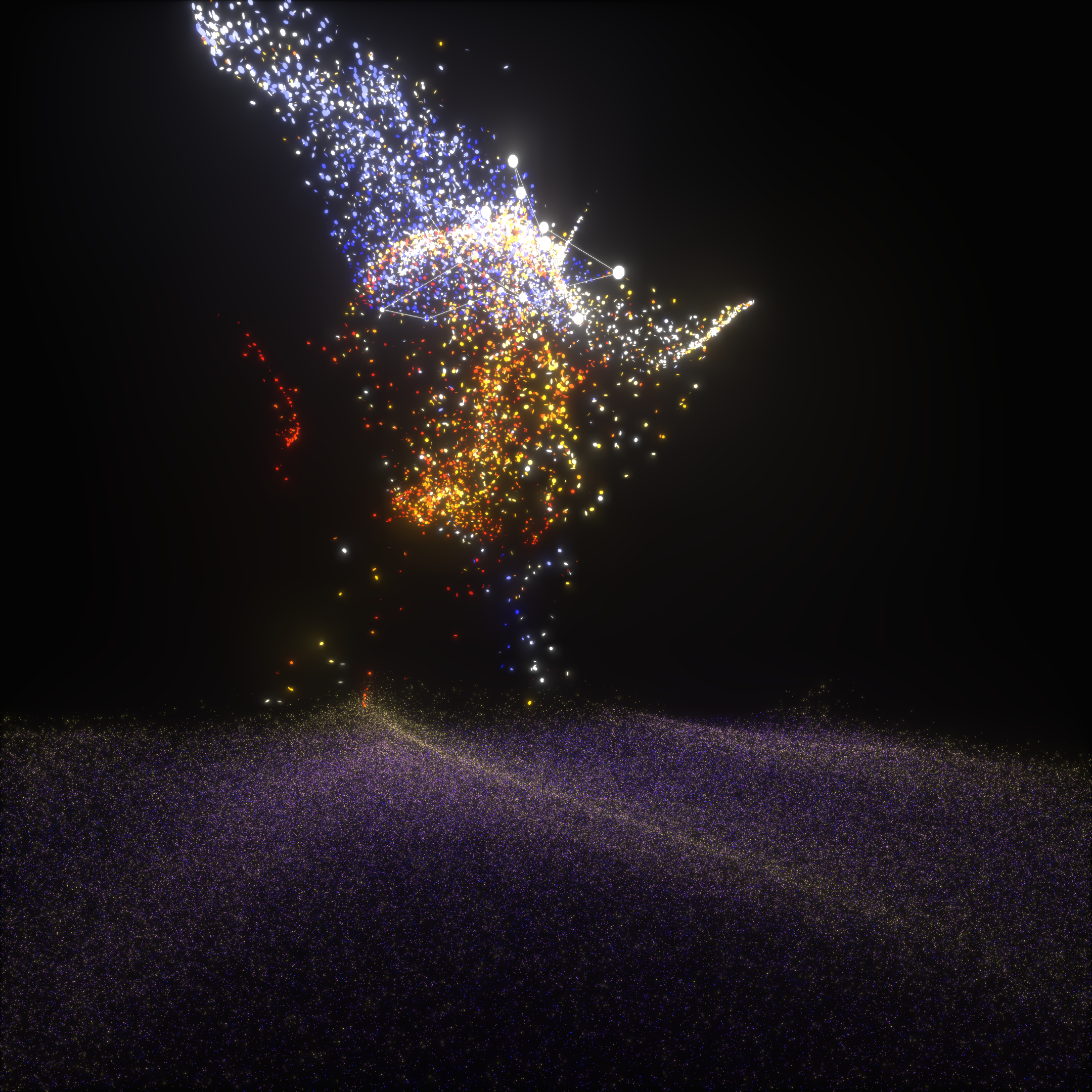
Project Design Description
P1 - Visual Effects
1. Star Point Design
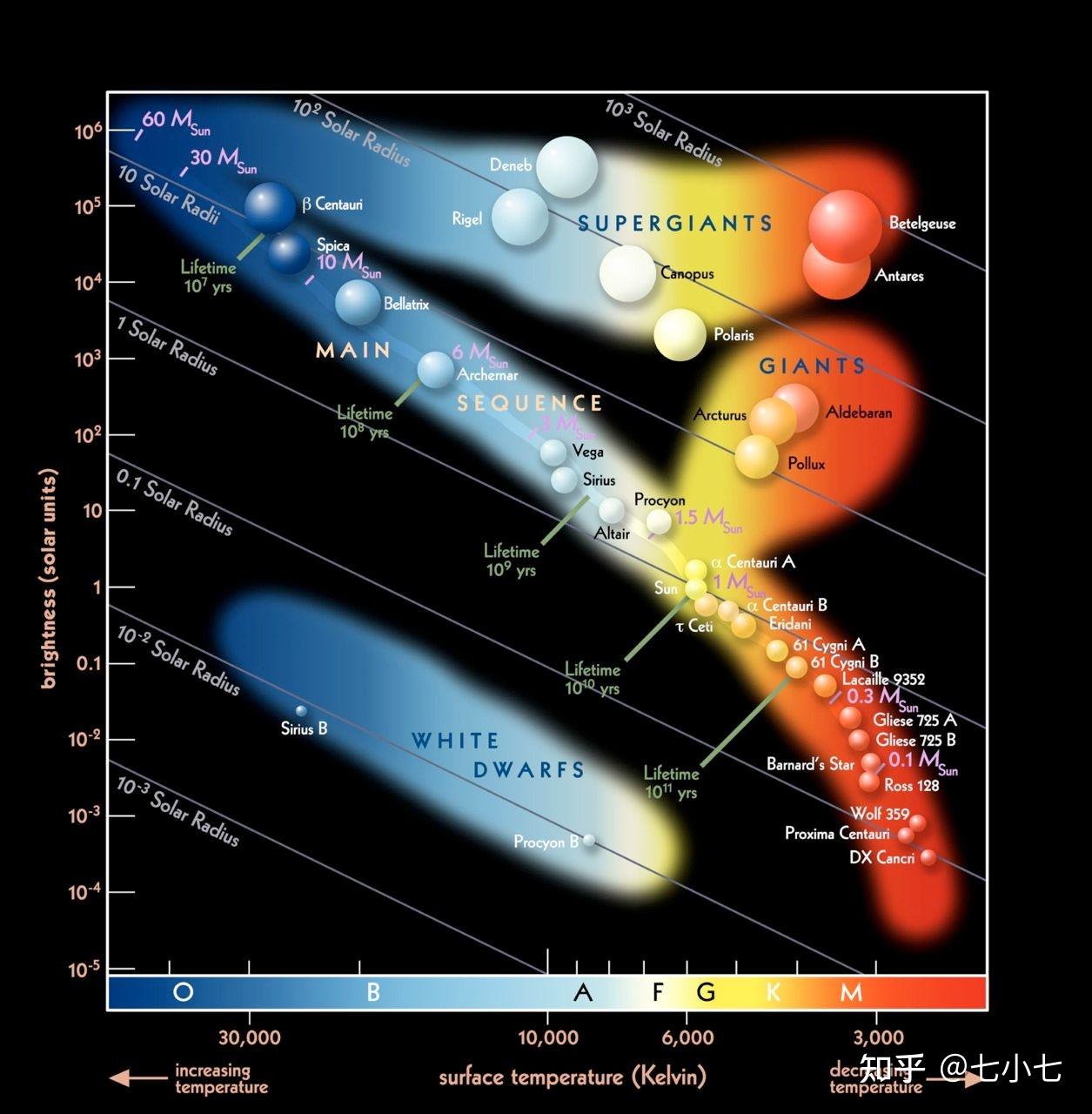
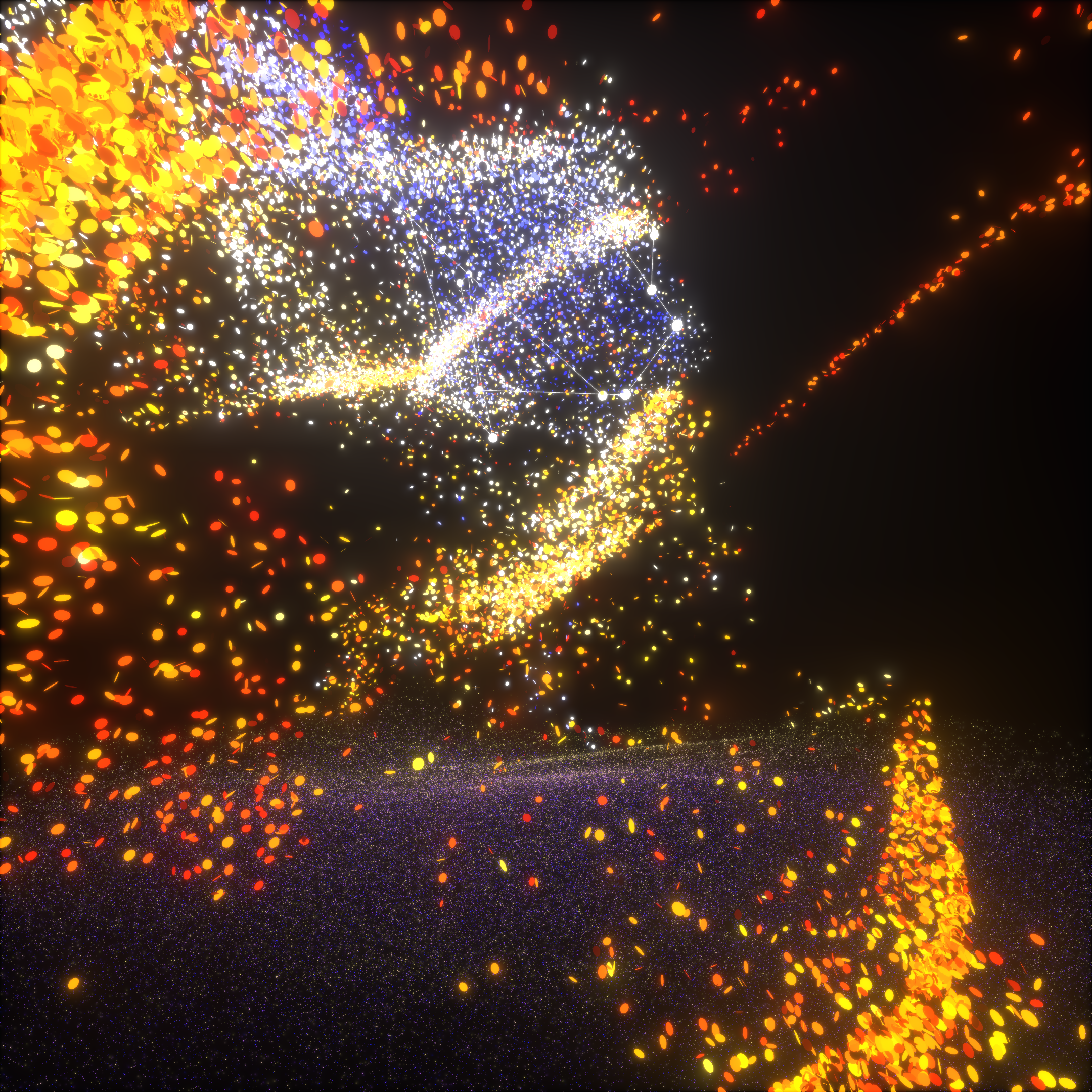
- Color Palette: Uses Hertzsprung–Russell diagram colors to better match real starry sky hues.
- Particle Form: Star point particles adopt a flat circle design to enhance visual layering.
2. Constellation Generation
- Generation Method: Determines star point positions via randomly generated white star point shapes.
- Feature: Each computation generates a unique, random visual scene.
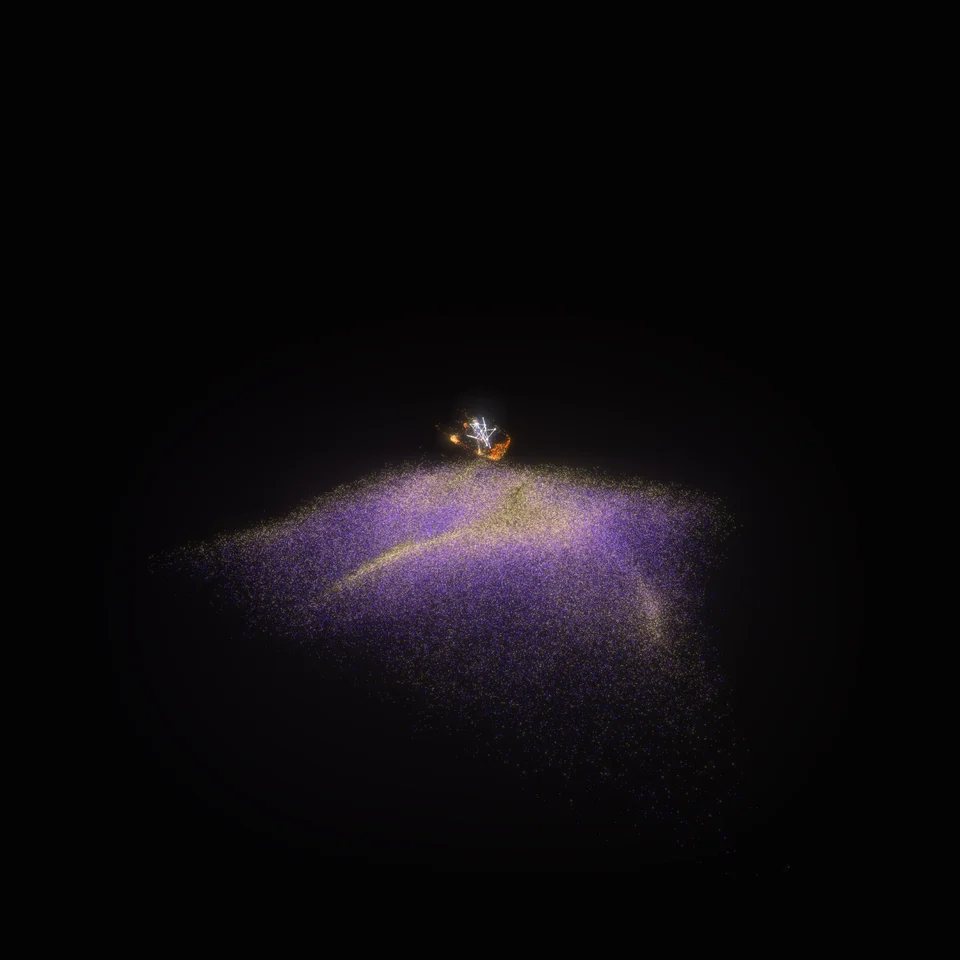
3. Starry Sky Carpet
- Function One: Fills space to avoid visual emptiness; assists with orientation in large streaming environments to prevent collisions with walls.
- Function Two: Displays the true colors of stars (except green). These colors are subtle to the naked eye and serve as visual fillers through tiny star points.
P2 - Music Interaction
1. Rhythm
- Influences the movement speed of star point particles.
- Affects the wave-like motion of the starry sky carpet.
2. Loudness
- Controls the amplitude of the starry sky carpet's undulation.
Technical Framework
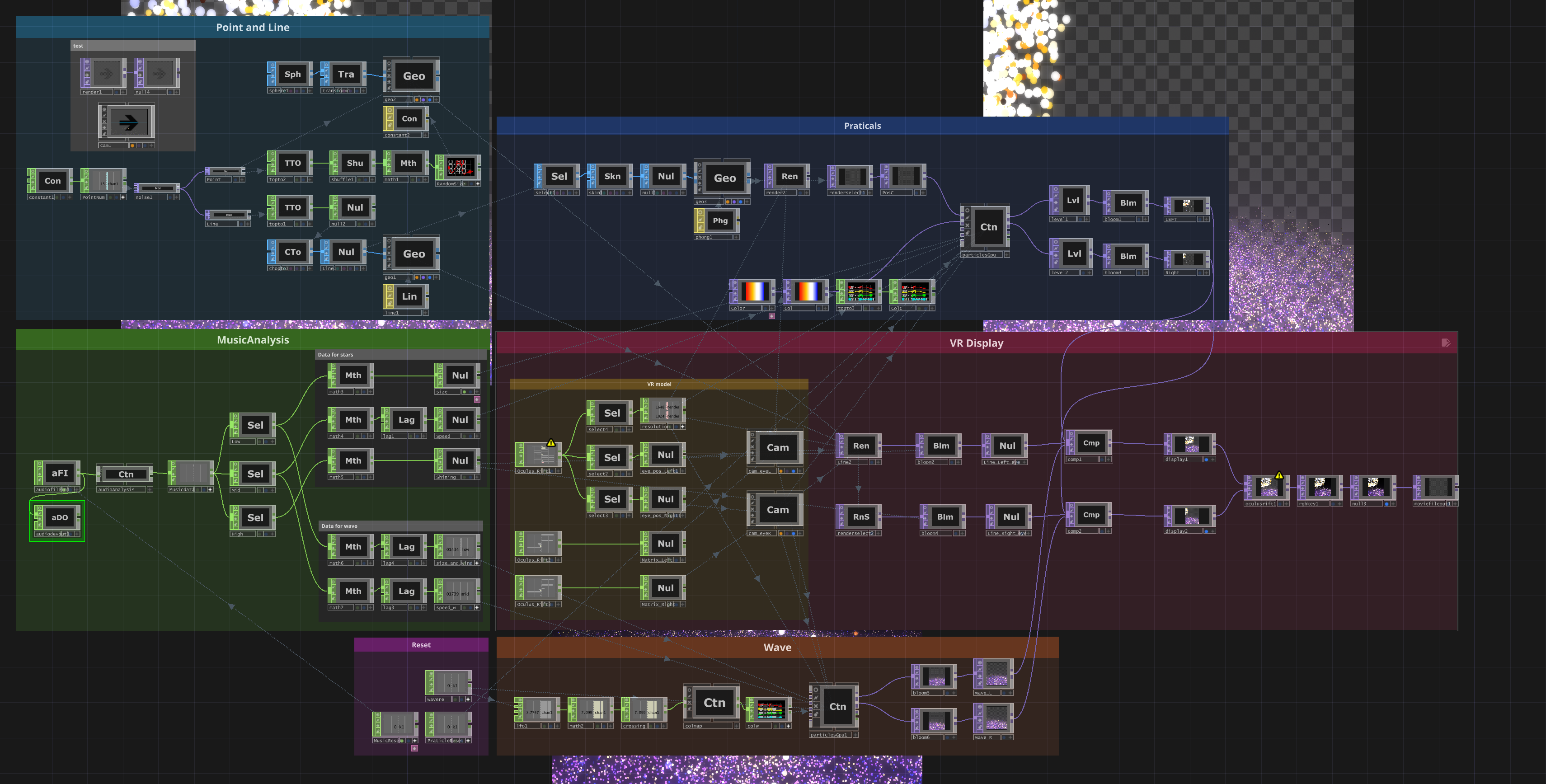
- Development Environment: Built on the TouchDesigner software platform.
- Streaming Component: Developed for Quest 3, supports real-time computation, and is compatible with Quest series devices.
- Process Overview:
- Generate constellation points and connecting lines.
- Generate star point particles based on surfaces formed by the connecting lines.
- Individually set wave states for the particles.
- Analyze music melody to control visual effects.
- Connect to VR devices for output.
- Device Compatibility: The streaming component can be adapted for other VR device brands (requires custom development).
- Output Format: VR video output uses DPSM (Dual Paraboloid Environment Mapping).
- Test Playback Software: SkyBox.